










Crew change transportation from BlaakLane.com moves joining and leaving seafarers between the airport, the hotel, the port gate and the launch or boat landing. Each crew change is planned by a coordinator with the ship manager, crewing agency or port agent, confirmed in writing, re-planned when the berth or ETA moves, and billed to the ship manager or agent against the vessel and voyage reference.
How crew change transportation works
A crew change joins two schedules that rarely agree: airline flights and a vessel's ETA. Seafarers land on a fixed flight, but the ship may berth a day late, shift anchorage or change terminal. Ground transport has to absorb that uncertainty without leaving joining crew at an airport or leaving off-signers at a port gate.
We run crew change transportation as a planned movement, not a taxi booking:
- Request. The ship manager, crewing agency or port agent sends the crew list, flight details, vessel name, port, expected berth or anchorage, and the agent's contact.
- Plan. A coordinator confirms the vehicles, the route, the port entry arrangements through the agent, and any hotel holds. The plan is confirmed in writing.
- Execution. Arrivals are tracked and timed to actual landing. The dispatcher stays in contact with the agent as the vessel's position changes.
- Close-out. The movement record, with actual times and any waiting, is billed to the party named on the job.
Outside the home dispatch area around Toronto, each crew change is driven by a vetted local affiliate operator from the LimousineWorldwide.Directory network, contracted to the BlaakLane.com standard. The confirmation names the operator, and the chauffeur and vehicle details go to the agent and the crew lead before pickup.
Who we work with
Crew change transport is booked by the people responsible for getting seafarers on and off ships:
- Ship managers and technical managers who run crewing for their managed fleet and need one provider across many ports.
- Crewing and manning agencies that recruit and deploy seafarers and arrange their travel to the vessel.
- Port agents and husbandry agents who handle the vessel's port call, arrange port passes and coordinate crew movements locally.
- Ship owners and charterers with in-house marine personnel departments.
- P&I correspondents and medical assistance companies handling a sick or injured seafarer who must leave the vessel.
We take instructions from whichever party is named on the job, and we copy the port agent on every movement in a port, because the agent controls access and knows the vessel's latest position.
Airport to vessel: the standard sign-on movement
The joining movement usually runs airport to hotel, then hotel to port on the boarding day, or airport straight to the vessel when the ship is alongside and the timing works.
For each sign-on we confirm:
- The flight and landing time, with flight tracking so the vehicle is timed to the actual arrival.
- The pickup point. The standard is the airport's designated commercial or pre-arranged pickup area. A meet in the arrivals hall with a name board is an add-on, available only in selected locations, and it is worth adding for seafarers on their first contract or arriving in a country where they do not speak the language.
- Luggage. Seafarers joining for a long contract carry heavy bags. A crew of six with full contract luggage can need a Standard Black SUV or a Sprinter Van, not a sedan.
- Documents on arrival. The crew lead should have the agent's letter or the details of the vessel and the agent to hand at immigration, and our chauffeur carries the agent's contact and the vessel reference.
- The drop. Hotel, agent's office, port gate or terminal, as the agent instructs.
International arrivals include 60 minutes of waiting from actual landing, which usually covers immigration for a small crew. Where a crew is likely to be held longer, for example for crew-specific immigration checks, the coordinator plans extra waiting and confirms the cost in writing.
Launch and boat-landing pickups
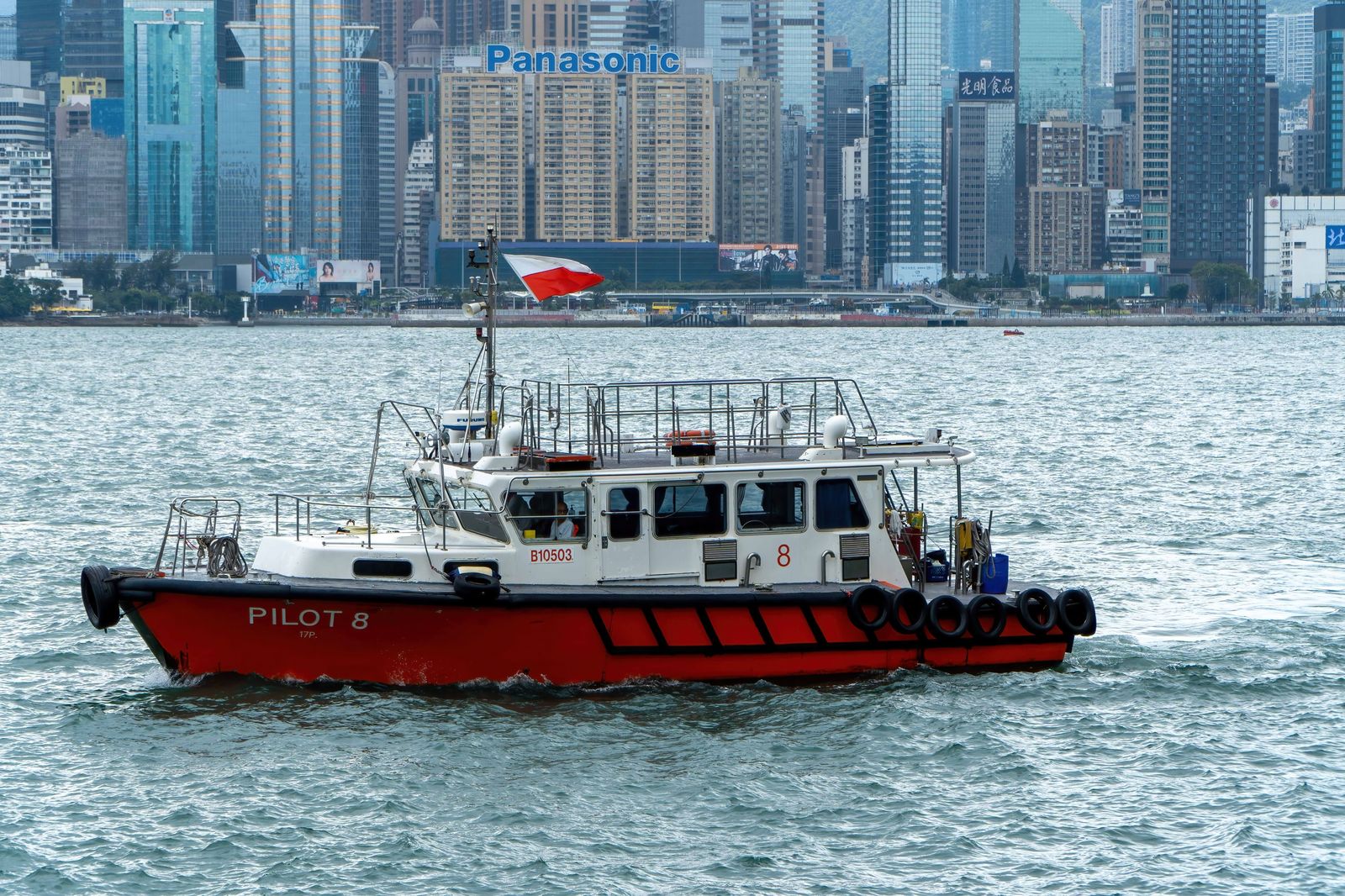
When a vessel is at anchorage, joining and leaving crew transfer by launch. Our part is the road leg to and from the landing: the vehicle takes joining crew to the launch landing at the time the agent gives, and collects off-signers when the launch comes back.
Launch operations depend on weather, sea state, port traffic and the launch schedule, so these movements are managed through the agent in real time:
- The chauffeur arrives at the landing ahead of the launch time and stays in contact with the agent.
- If the launch is delayed or cancelled because of weather, the dispatcher holds or returns the crew according to the agent's instruction, and hotel holds can be activated.
- For off-signers, the vehicle is timed to the launch's return, which the agent confirms, not to a fixed clock time.
In ports with major anchorages, such as Singapore with landings such as Marina South Pier, or the Rotterdam and Antwerp port areas, the launch landing, the gate and the access rules are recorded in the job plan. Launch services themselves are arranged by the agent or the ship manager, not by us.
Sign-off: vessel to airport, hotel or home
Off-signing crew have usually completed a long contract and have one aim: to make the flight home. The sign-off movement runs from the port gate, terminal or launch landing to the airport, a hotel if the flight is the next day, or directly home where the seafarer lives within driving range.
We plan the sign-off around two uncertainties: the exact time the seafarers are released after the handover and immigration sign-off, and the drive time to the airport. The vehicle is booked for the time the agent gives, with a buffer for the release, and the dispatcher checks the flight departure time so a slow release is escalated early. Where the drive to the airport is long, such as from outer port terminals to a city airport at rush hour, the plan uses a realistic drive-time range rather than an off-peak estimate.
Visas, transit and shore passes, described plainly
Immigration requirements for seafarers depend on the seafarer's nationality, the country of the port, whether they are joining a ship or transiting, and the documents they hold. This section describes the general landscape; the port agent and the crewing agency are responsible for the specific requirements of each crew change.
- Seafarer identity documents. Many seafarers carry a seafarer's identity document or seaman's book alongside the passport. The International Labour Organization conventions on seafarers' identity documents and the Maritime Labour Convention set out the framework for how states treat these documents and for shore leave.
- Transit and joining visas. A seafarer flying in to join a ship may need a transit or crew visa, depending on the country. Some countries issue specific crew or seaman visas; in the United States, for example, crew typically need the appropriate crew visa, and landing and shore leave are handled by U.S. Customs and Border Protection.
- Agent's letters and guarantee letters. Immigration officers often expect a letter from the local agent confirming the vessel, the port and the joining date. Crews should carry it.
- Shore passes. Crew going ashore from a vessel in port may need a shore pass issued through the agent. A ground transfer from the ship does not replace this.
What this means for transport: the chauffeur does not deal with immigration, and cannot move a seafarer who has not been cleared. We time pickups to allow for clearance and we keep the agent informed if clearance takes longer than planned.
Port security under the ISPS Code
Most commercial port facilities handling international trade operate under the International Ship and Port Facility Security Code, adopted by the International Maritime Organization under the SOLAS Convention and in force since July 2004. Under the ISPS Code, each port facility has a security plan and a port facility security officer, each ship has a ship security officer, and security levels 1, 2 and 3 set how tightly access is controlled.
For crew change transport, the practical effects are:
- Vehicle access is controlled. A vehicle entering a terminal or berth area usually needs prior clearance, arranged through the port agent, with the vehicle plate and driver's name submitted in advance.
- Driver identification. The chauffeur carries photo identification and may need a port-issued pass. Some facilities do not let outside vehicles in at all, and crew are shuttled between the gate and the ship by the terminal.
- Security levels change. At a higher security level, access may be restricted further at short notice. The agent tells us, and the dispatcher adjusts the drop point.
- Crew lists matter. The names on the vessel's crew list and the port pass list must match the people in the vehicle.
We supply chauffeur and vehicle details to the agent as early as the port requires, and we do not attempt to enter a facility without clearance.
Berth changes, ETA slips and the updated plan
Vessel schedules move. A ship may arrive early, wait at anchorage, shift berth or change terminal, and the crew change moves with it. Our process for changes:
- The agent or ship manager notifies the coordinator of the new ETA, berth or anchorage.
- The dispatcher re-plans the movement: new pickup time, new drop point, and new port access details where the terminal has changed.
- If joining crew have already landed, they are taken to the hotel hold instead of the port.
- If the change affects the fare, for example a longer drive to a different terminal or extra waiting, the new fare is confirmed in writing before the vehicle runs.
Ad hoc crew change bookings outside a contract follow the standard BlaakLane.com cancellation terms: cancelling more than 72 hours ahead costs nothing, within 72 hours the charge is 10% of the fare, within 48 hours it is 50%, and within 24 hours, or for a no-show, the full fare is due. Ship manager contracts can set a specific rule for schedule-driven changes.
Manifests and what the chauffeur carries
A crew change manifest keeps the movement correct at every checkpoint. For each job we ask for:
| Item | Purpose |
|---|---|
| Vessel name and IMO number | Identifies the vessel at the port and on the invoice |
| Port, terminal, berth or anchorage | Sets the drop and the access arrangements |
| Crew names, ranks and nationalities | Matches the port pass list and the vehicle load |
| Flight numbers and arrival times | Flight tracking and pickup timing |
| Agent's name and 24-hour number | The chauffeur's first contact at the port |
| Hotel details, if any | Hotel hold drops and next-day pickups |
| Billing reference | Voyage, vessel or cost-centre reference for the invoice |
The chauffeur carries the agent's contact, the vessel reference and the crew lead's name, not copies of passports. Personal data is shared only with the assigned operator and only for the movement.
Hotel holds and waiting days
When the vessel is delayed or the flight lands a day before boarding, joining crew wait in a hotel. Hotel rooms are booked by the agent or the crewing agency, or through our travel desk run with BookingWorldwide.net if you want one provider for rooms and transfers. We move the crew from the airport to the hotel, and from the hotel to the port or launch landing when the agent calls the boarding time.
Hotel holds need a clear rule for the call. We recommend that the agent confirms the boarding pickup at least a few hours in advance where the vessel schedule allows, and that the crew lead is told the pickup time and the chauffeur's name the evening before.
Medical repatriation transfers
A seafarer who is sick or injured may need to leave the vessel at short notice, travel to a clinic or hospital, and then fly home, sometimes with an escort. Where the patient is fit to travel by car, we provide the road legs: port or landing to hospital, hospital to hotel, hotel to airport.
What we do and do not do:
- We provide a clean, comfortable vehicle with space for the patient to sit or recline, a companion or escort, and luggage.
- We time pickups to the hospital's discharge time and the flight, and the dispatcher coordinates with the assistance company or the agent.
- We do not provide ambulances or medical staff. Patients who need medical care in transit need an ambulance or medical escort arranged by the P&I club, the assistance company or the agent.
These movements are handled with discretion. Only the people who need medical information receive it.
Vehicles for crew change
| Vehicle class | Typical crew change use |
|---|---|
| Standard Sedan | One or two seafarers with luggage, officers joining individually |
| Executive SUV | Two to four seafarers with contract luggage |
| Standard Black SUV | Crews of five to seven with bags |
| Sprinter Van | Larger crew groups, around 10 to 12 with bags |
| Minicoach | Full crew changes, rotation of a large part of the crew |
| Motorcoach | Very large crew rotations or several vessels at once |
Seafarers often travel with more luggage than business travellers, so we plan by bag count as well as by seats. Full class descriptions are on the fleet page. For larger movements, see group transportation.
Billing to the ship manager or agent
Crew change costs are usually charged to the vessel or the voyage. We bill whichever party instructed the job:
- Ship manager or owner under a corporate account, with monthly invoicing and one line per movement tagged with the vessel name, IMO number and voyage reference.
- Port agent, who may recharge the costs to the ship in the disbursement account.
- Crewing agency, where the agency's contract with the owner includes travel to and from the vessel.
Each invoice line shows the movement date, route, crew count, vehicle class, waiting time and any change fees. Ad hoc movements can be booked through the booking page, which shows a fixed fare before you confirm; there is no meter and no surge. Indicative ranges by vehicle class are on the rates page.
Major crew change ports we cover
Crew changes happen wherever ships call, and BlaakLane.com covers 500 cities in about 119 countries. Common crew change locations include Singapore, Rotterdam, Antwerp, Hamburg, Houston, Dubai, Athens and Piraeus, Panama City and Manila, which is also a major departure point for seafarers. Airport pages such as Singapore Changi and Amsterdam Schiphol cover the arrival side.
If a port falls outside our affiliate coverage, the coordinator will tell you during planning.
Setting up crew change transportation
To start, send the coordinator the vessels or fleet, the ports you use most, the parties that will instruct jobs, the billing arrangement and a 24-hour contact. We agree the booking format, the escalation contacts and the rules for schedule changes, then confirm them in writing. After that, each crew change is a single request to the desk. For the cruise sector, see cruise lines and cruise ports.