




BlaakLane.com offers a chauffeur service in Copenhagen that you book online at a fixed fare. Enter the pickup, destination, date, time and vehicle and you see the price before you confirm: no meter and no surge. Copenhagen Airport (CPH) arrivals at Kastrup are flight-tracked, trips over the Øresund Bridge to Malmö can be booked the same way, and a vetted local affiliate named on your confirmation drives each trip.
How does booking a chauffeur service in Copenhagen work?
Use the reservation engine on this page, or go to book. Pickups can be a Kastrup terminal, a cruise ship at Oceankaj, a hotel on Kongens Nytorv or an office in Ørestad. Add where you are going, the date and time and the vehicle class, and the engine prices that exact journey. After you confirm, the Toronto dispatch desk, open 24/7, allocates it to a vetted Copenhagen affiliate operating under the BlaakLane.com written standard. The confirmation lists the operator, the chauffeur and the plate.
Copenhagen's centre is small and very cycle-friendly, so many visitors only need a car at the edges of the trip: the airport, the cruise quay, a dinner out of town or a meeting in Malmö. For a full day of site visits, an hourly chauffeur service keeps one car and one chauffeur with you.
What your Copenhagen fare includes
- Flight tracking and included waiting: 60 minutes after actual landing for international flights, 30 minutes for domestic ones such as Aalborg or Billund, 15 minutes for other pickups, then 15-minute blocks.
- Child seats for Copenhagen trips on request, at no cost.
Denmark has few road charges, so for most city trips the fare turns on distance, time and vehicle; gratuity and any paid parking are charged at actual cost and added to the booking. Planning ranges are on the rates page. Cancellation terms: no charge more than 72 hours before pickup, 10% at 72 hours or less, 50% at 48 hours or less, and 100% at 24 hours or less or for a no-show.
Copenhagen Airport, Kastrup: terminals and pickup
Copenhagen Airport, run by Copenhagen Airports, is on the island of Amager, about 8 km south-east of the City Hall Square. It is the largest airport in the Nordic region and one of the easiest to leave: Terminals 2 and 3 share one arrivals hall, so whichever terminal your flight uses, you come out into the same place after customs. Flights from outside Schengen, including those from the UK and North America, pass through passport control on the way.
Standard pickup is curbside at the designated area for pre-arranged vehicles close to the arrivals hall; the confirmation gives the exact spot and a phone number for your chauffeur. A name-board meet and greet inside arrivals is an add-on, and add-ons are only available in selected locations.
| From Kastrup to | Typical drive |
|---|---|
| Indre By, Nyhavn, Kongens Nytorv | 15 to 25 minutes |
| Ørestad and the Bella Center | 10 to 15 minutes |
| Nordhavn and Oceankaj cruise quay | 20 to 30 minutes |
| Hellerup and the northern suburbs | 25 to 40 minutes |
| Malmö city centre, via the bridge | 30 to 40 minutes |
| Lund | 40 to 50 minutes |
The metro (line M2) and trains from the airport reach the centre in about 15 minutes. A car makes more sense with luggage, with a group, or when the destination is in the northern suburbs, Nordhavn or Sweden. Business jets typically use the general aviation area at Kastrup or Roskilde Airport, about 30 km west of the city; see private aviation for how we coordinate with handling agents.
Over the Øresund Bridge to Malmö and Lund
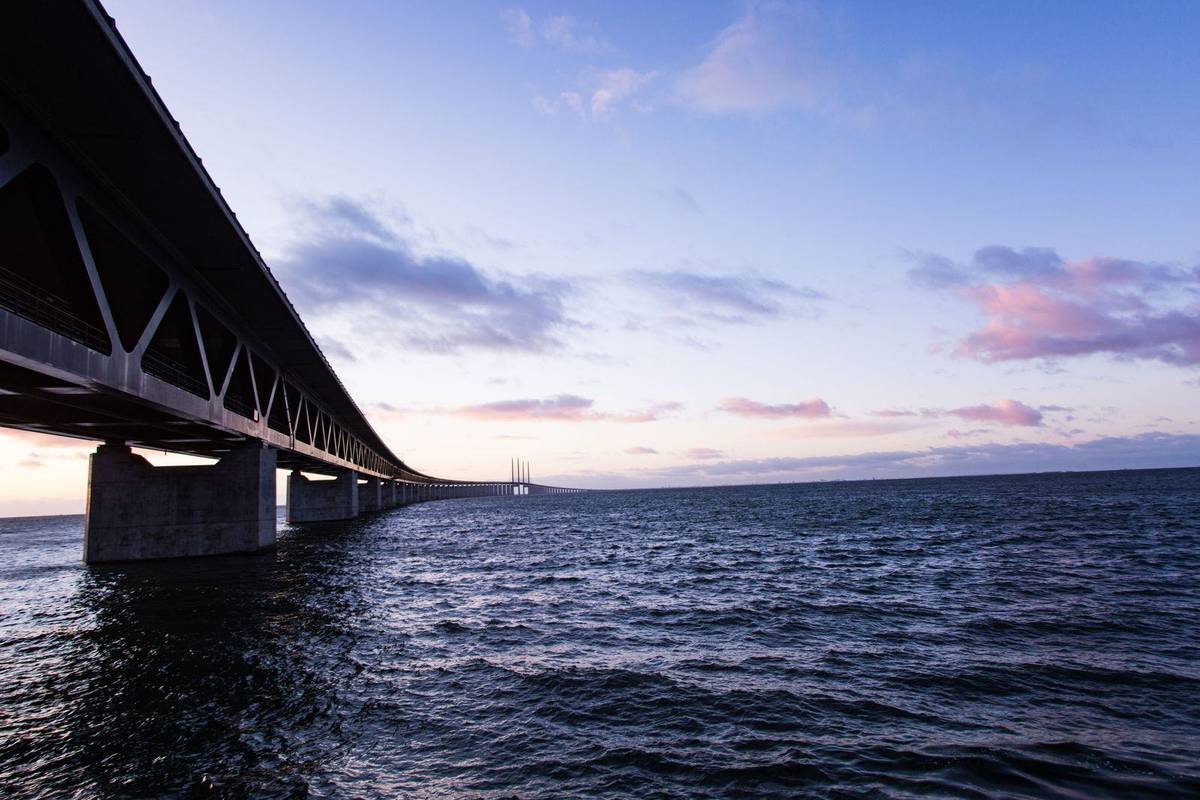
Malmö is Sweden's third city and sits directly opposite Copenhagen. The fixed link between them runs from Kastrup through the 4 km Drogden tunnel, across the artificial island of Peberholm and over the 7.8 km cable-stayed bridge to Lernacken, near Malmö. The toll is collected at the Lernacken station in Sweden, in both directions; the drive-up price for a passenger car is around DKK 470 each way in 2026, according to Øresundsbron.
Two border practicalities matter on this crossing:
- Swedish checks. Swedish police carry out border checks on traffic entering Sweden at Lernacken. Every passenger should carry a passport or national ID card.
- Danish checks. Denmark also runs checks on traffic from Sweden at times. The chauffeur allows extra minutes in the schedule when checks are active, especially at the morning and evening commuter peaks.
Typical uses include a hotel in Copenhagen with meetings at Medicon Village in Lund or the Western Harbour in Malmö, a flight into Kastrup for a stay in Skåne, or a cruise passenger heading to southern Sweden. The route can be booked as an intercity transfer or as hourly time for a round trip with waiting.
Which vehicle for Copenhagen?
A short guide to the fleet:
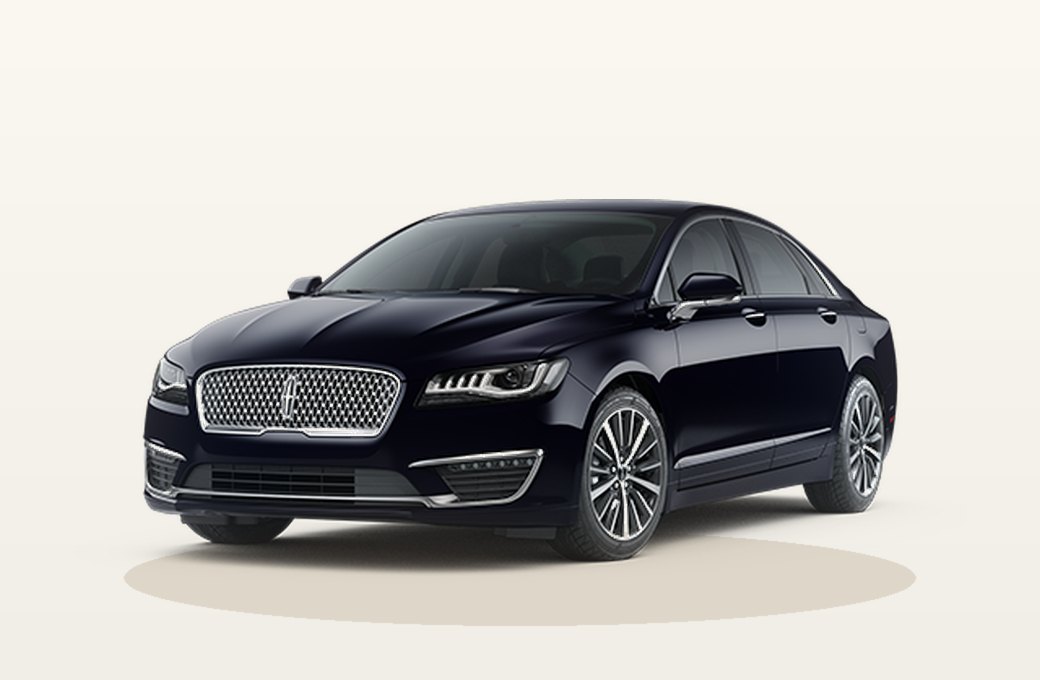
- Standard Sedan for one or two people from Kastrup to a hotel.
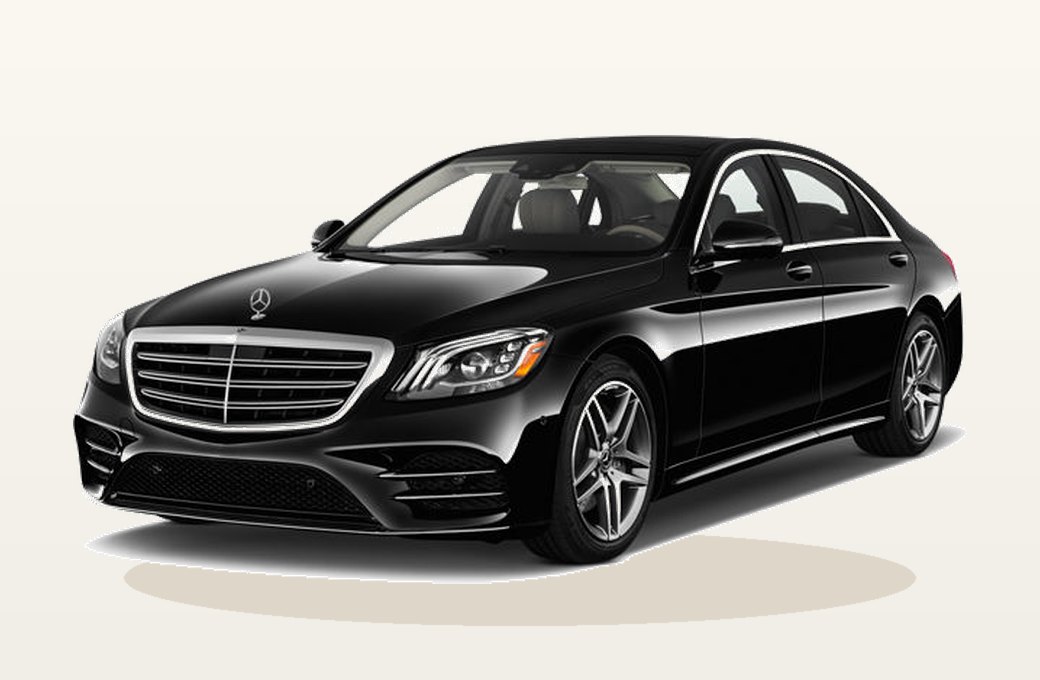
- Luxury Executive Sedan for executives between the Inner City, Hellerup and Ørestad.
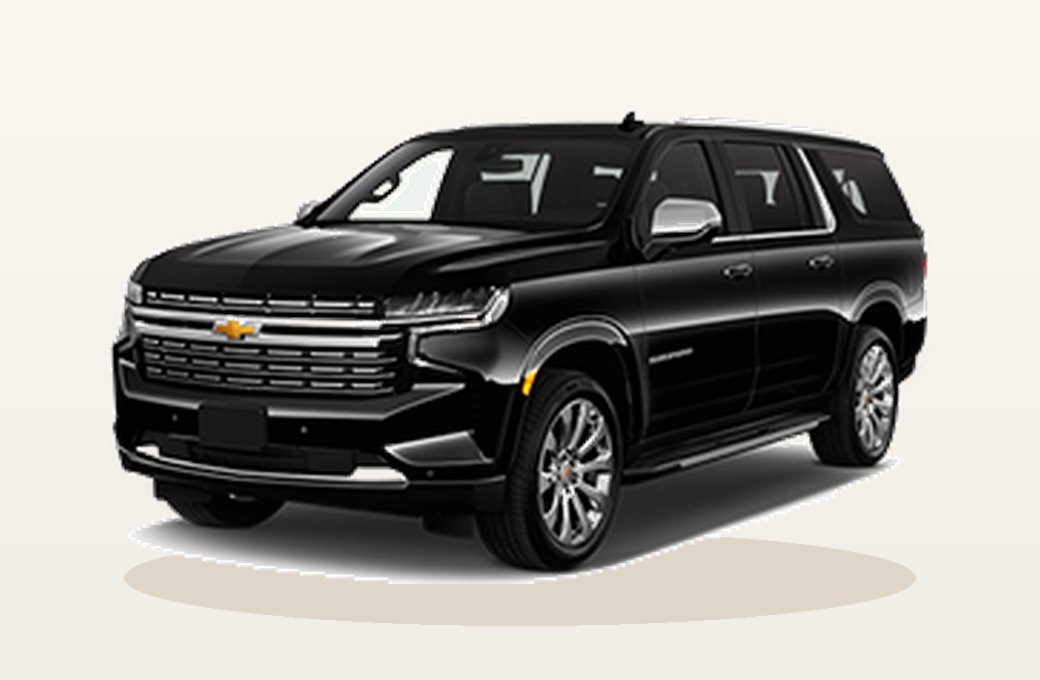
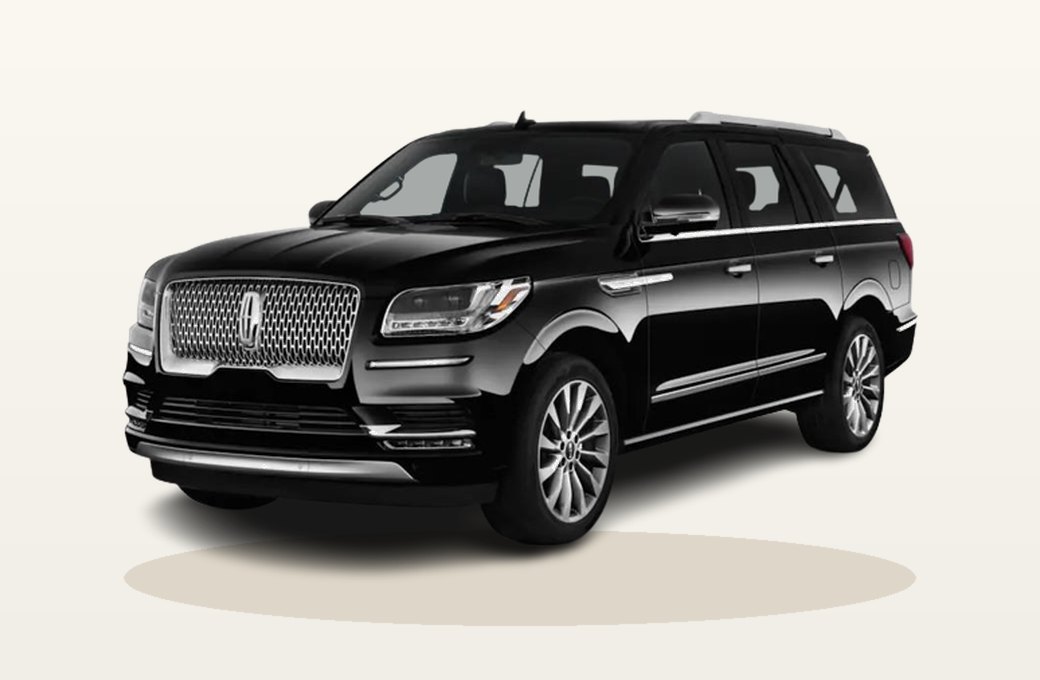
- Executive SUV for families with ski bags or several suitcases.
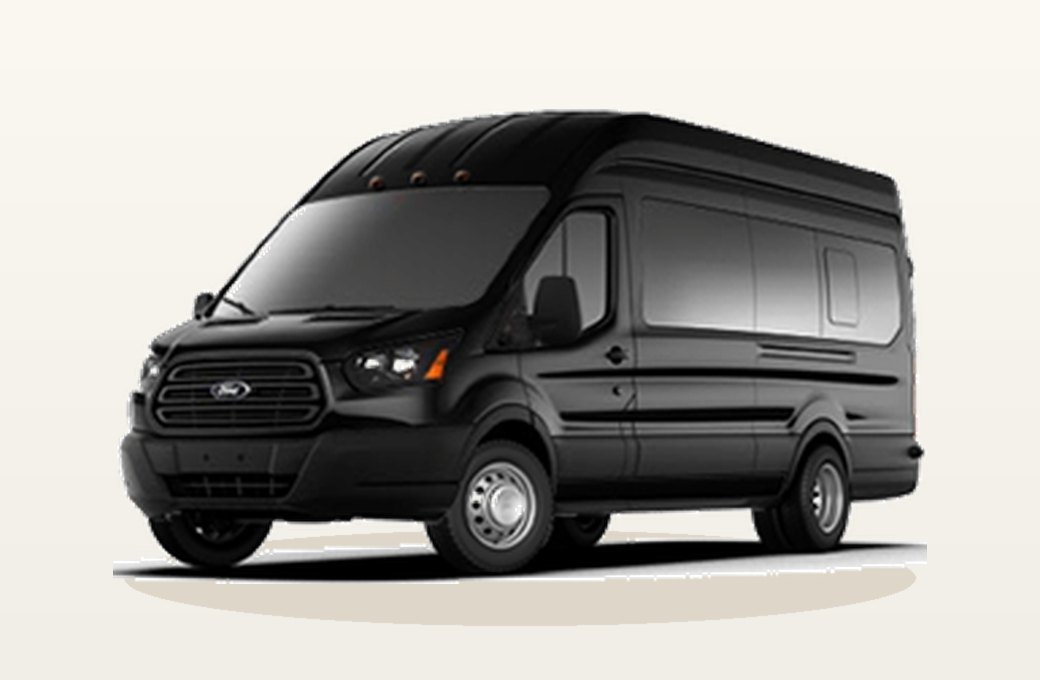
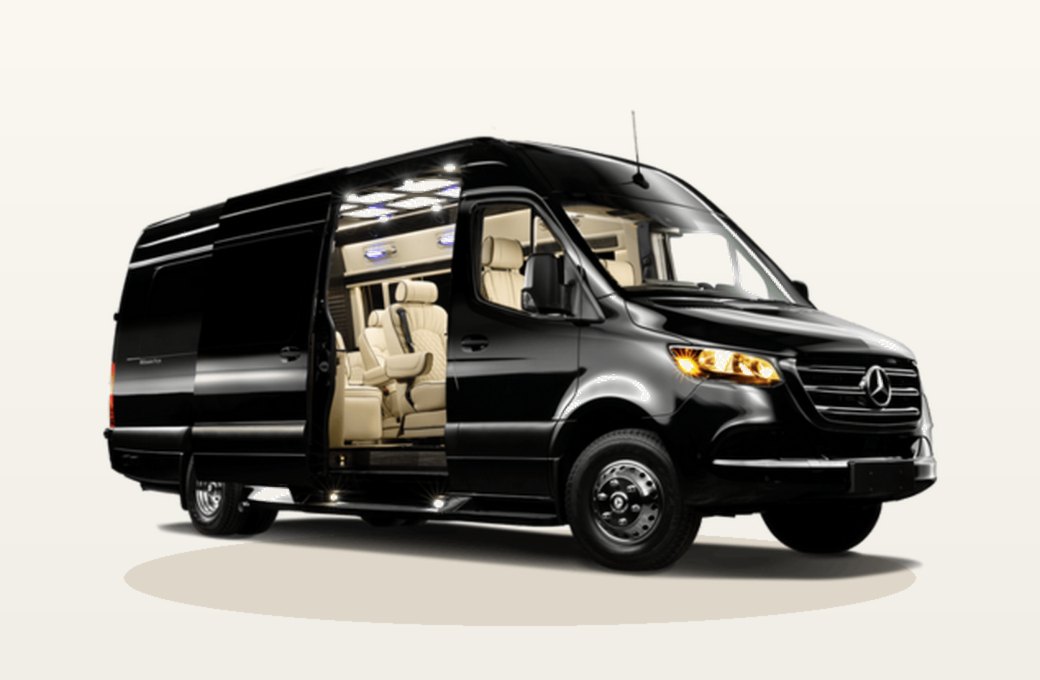
- Standard Black SUV or Sprinter Van for cruise groups at Oceankaj or teams to the Bella Center.
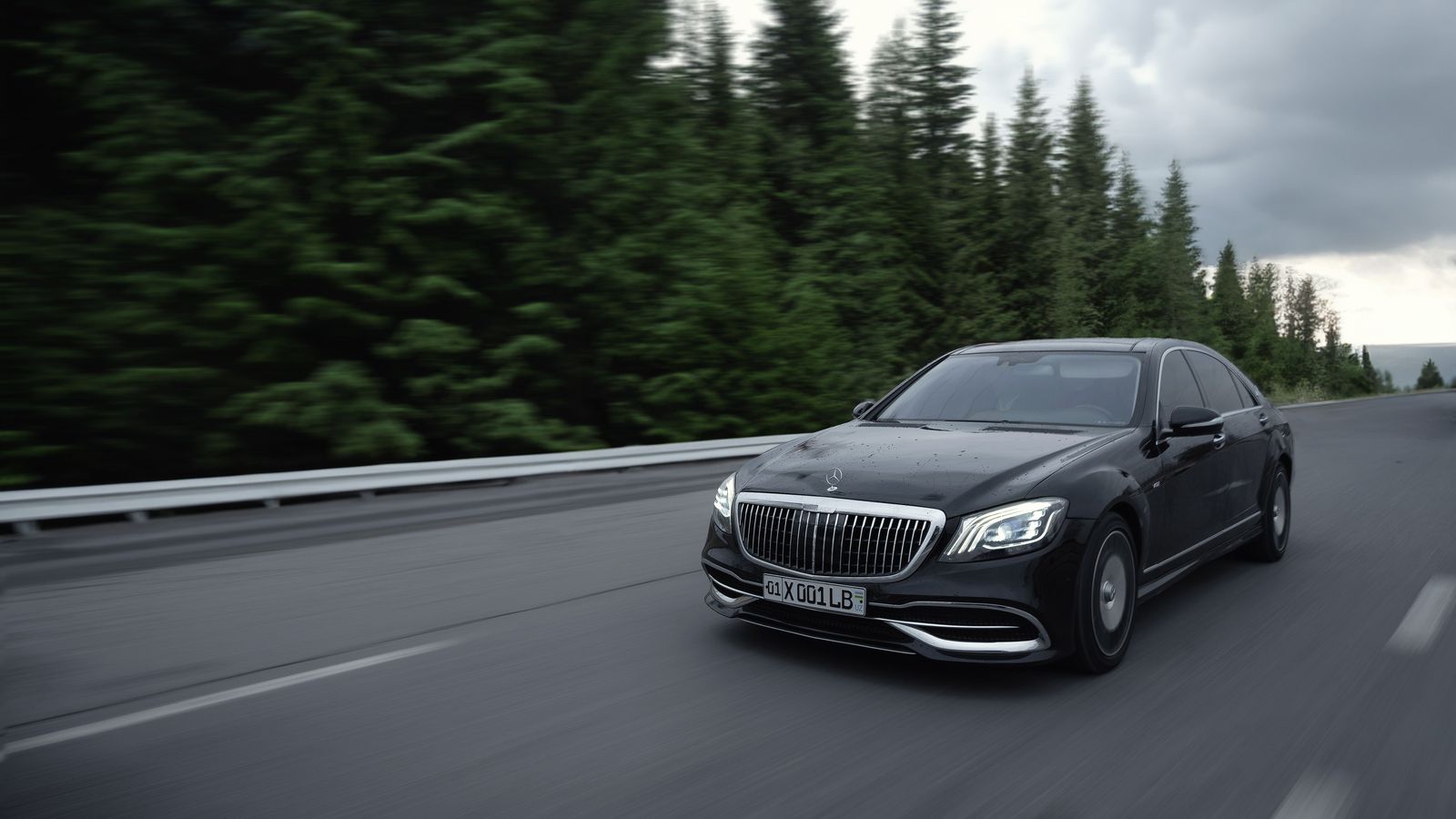
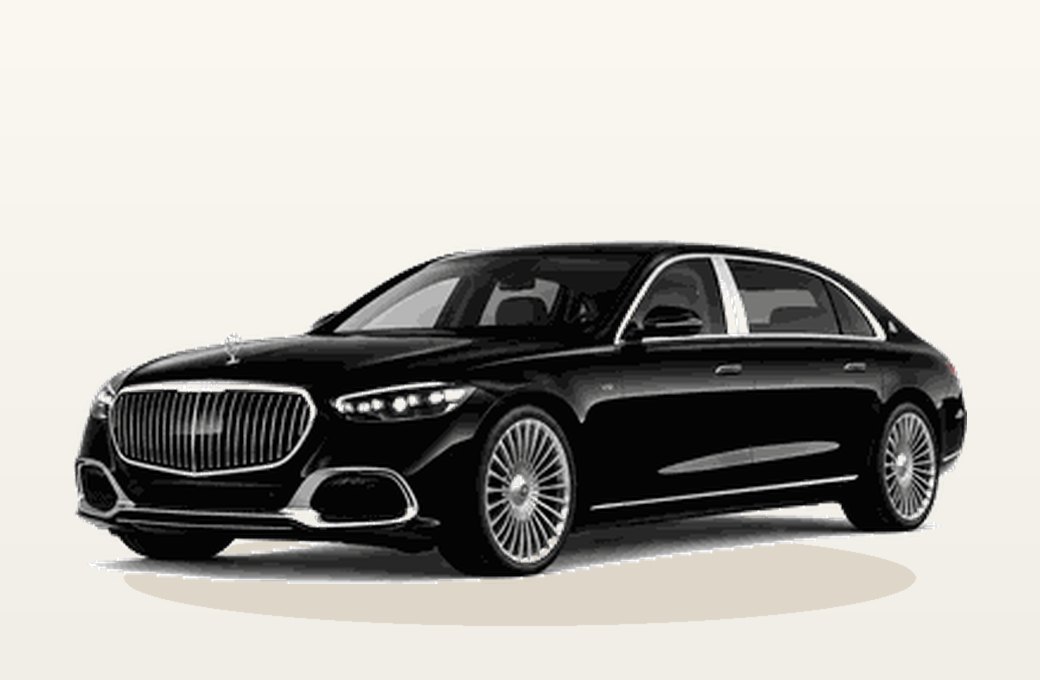
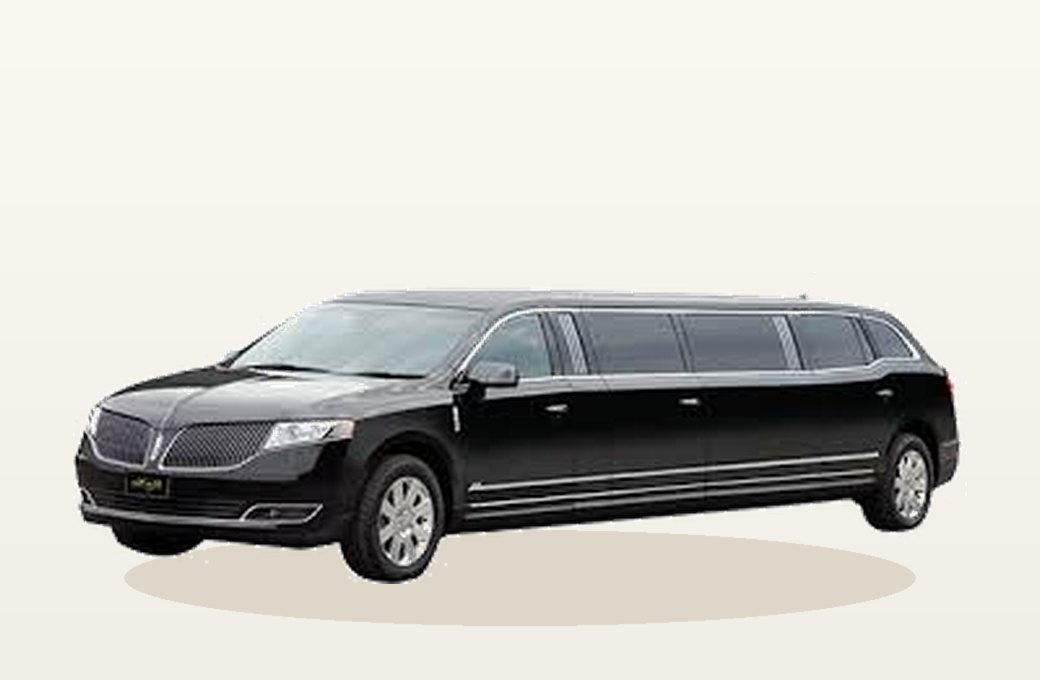
- Stretch limousine, Rolls-Royce, Maybach or Bentley (partner) for weddings and gala nights.
- Armoured SUV or sedan (partner) on request, after a risk assessment.
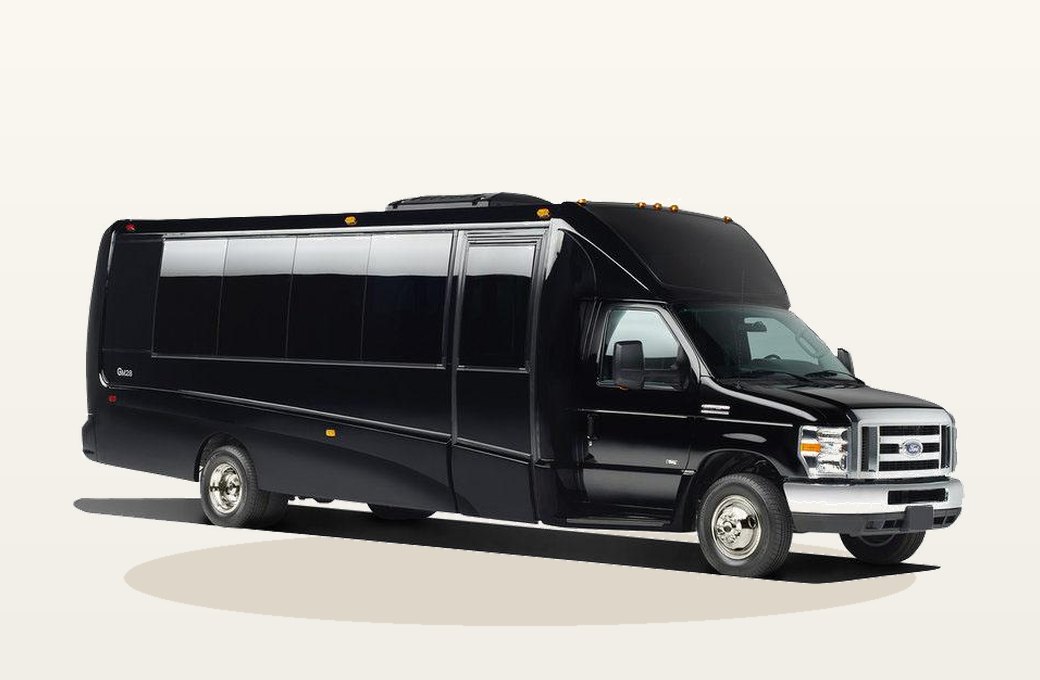
- Minicoach or motorcoach for delegations, planned by a coordinator and confirmed in writing.
All affiliate vehicles are four model years old or younger, and only Rolls-Royce, Maybach and Bentley are accepted up to seven.
Copenhagen cruise quays
Copenhagen is a major Baltic turnaround port. Most large ships use Oceankaj in Nordhavn, the modern cruise quay with three terminal buildings, about 5 km north of the centre. Smaller ships and some calls berth at Langelinie, near the Little Mermaid, or at Nordre Toldbod, walking distance from Amalienborg. The port is run by Copenhagen Malmö Port. Details are on our Copenhagen cruise port page, and group shore programmes are covered on cruise lines and ports.
Oceankaj to Kastrup usually takes 25 to 35 minutes by car. On turnaround days, allow for queues on the Nordhavn access roads between about 08:00 and 11:00.
Districts, hotels and venues
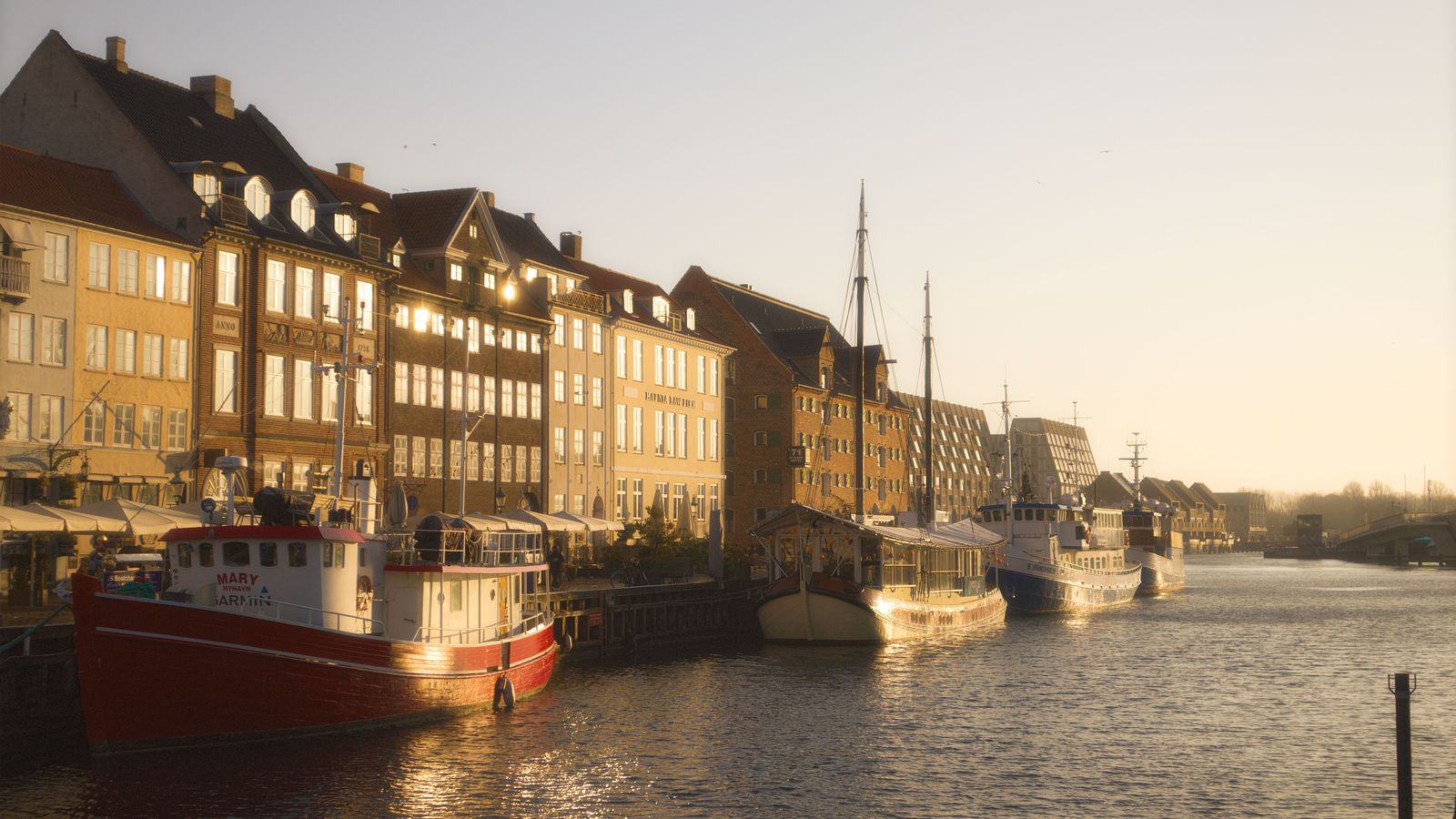
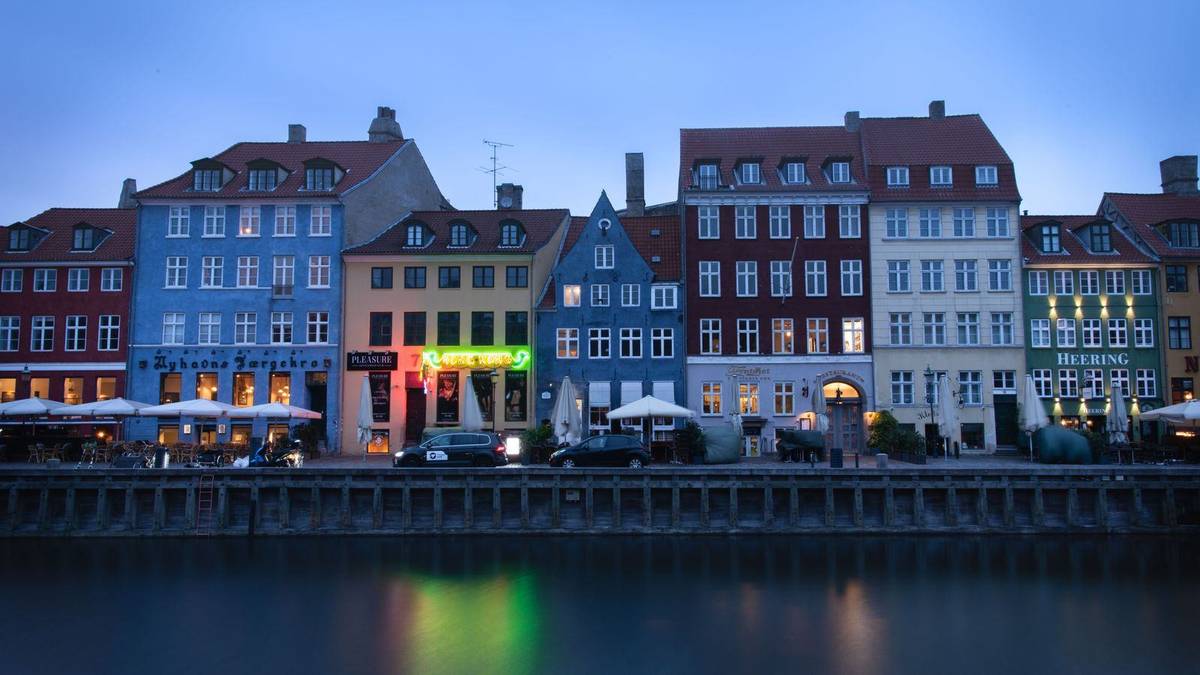
- Indre By: the medieval centre, Strøget, Kongens Nytorv and Nyhavn.
- Christianshavn and Holmen: canals, the Opera House and several company headquarters.
- Vesterbro and Kødbyen: restaurants, the Meatpacking District and Copenhagen Central Station.
- Ørestad: the Bella Center, the DR Concert Hall and modern offices close to the airport.
- Nordhavn: the cruise quays and new waterfront housing and offices.
- Hellerup and the coast road: embassies, residences and the route north to Klampenborg.
Landmark hotels, named as places, include Hotel d'Angleterre on Kongens Nytorv, Nimb in Tivoli Gardens, the Copenhagen Marriott on the harbour, the Villa Copenhagen beside Central Station and the AC Hotel Bella Sky next to the Bella Center. Major venues include Parken stadium in Østerbro, Royal Arena in Ørestad, Tivoli Gardens and the Opera House.
Events in Copenhagen by month
- January and August: Copenhagen Fashion Week.
- May: Copenhagen Marathon, usually in mid-May, with road closures.
- June: Distortion street festival in the first week of June; Roskilde Festival, about 30 km west, usually starts at the end of June.
- July: Copenhagen Jazz Festival.
- August: Copenhagen Pride and a busy cruise schedule.
- All year: medical and technology congresses at the Bella Center.
Check dates on Visit Copenhagen and plan multi-car moves through event transportation.
Longer drives from Copenhagen
| Route | Distance | Typical drive |
|---|---|---|
| Copenhagen to Malmö | about 40 km | 35 to 45 minutes |
| Copenhagen to Helsingør (Kronborg) | about 45 km | 45 to 55 minutes |
| Copenhagen to Roskilde | about 35 km | 35 to 45 minutes |
| Copenhagen to Odense | about 165 km | 1 hour 45 minutes to 2 hours |
| Copenhagen to Aarhus | about 300 km | 3 to 3 hours 30 minutes |
| Copenhagen to Hamburg | about 330 km with the Rødby ferry | 4 hours 30 minutes to 5 hours |
The Hamburg route uses the Rødby to Puttgarden ferry until the Fehmarnbelt tunnel opens, so the timing depends on the sailing. See our Hamburg and Stockholm pages for the far end of the longer Nordic trips.
Timing your departure from Kastrup
Kastrup is close to the city, which tempts travellers to leave late. Security queues at the central checkpoint can build quickly in the morning wave between about 06:00 and 09:00 and on summer Fridays. A practical plan is to leave the Inner City two hours before a European flight and two and a half to three hours before a long-haul one, and to add time when a cruise turnaround at Oceankaj is sending thousands of passengers to the airport on the same morning.
From Malmö or Lund the calculation changes: allow for possible checks on the bridge and the toll plaza at Lernacken, and choose a pickup at least three hours before a long-haul departure. Chauffeurs on cross-border runs carry the confirmation showing the route, which helps at checkpoints. If you are connecting from a ship to a flight on the same day, give dispatch the ship name, the flight number and the number of bags, and the pickup is set to the ship's published arrival rather than a guess.
Copenhagen for business travellers
Copenhagen's economy leans on life sciences, shipping and logistics, design and renewable energy, which shapes where cars go. Pharmaceutical and medical technology companies cluster north of the city towards Bagsværd, Lyngby and Hørsholm, and further along the Øresund coast; wind and energy firms have offices in Ørestad, Fredericia and Aarhus; shipping companies sit on the waterfront in Indre By and Nordhavn. A typical executive day might start at a hotel on Kongens Nytorv, move north to a campus meeting 30 to 40 minutes away, then return for dinner in Christianshavn. Booking that as hourly time avoids three separate trips and keeps bags in the car.
Driving in Copenhagen
Denmark drives on the right, and headlights must be on at all times. The single biggest local factor is the bicycle: Copenhagen has dedicated cycle tracks on most main streets and cyclists have priority at right turns, so chauffeurs stop only where it is legal and check mirrors before every door opens. The low-emission zone (miljøzone) covers Copenhagen and Frederiksberg and was extended in March 2025; diesel vehicles need a particulate filter to enter. Rush hour peaks roughly 07:30 to 09:00 and 15:30 to 17:30 on the ring roads and the Øresund motorway.
Arriving in Denmark: EES and ETIAS
Denmark applies the Schengen rules, and non-EU visitors on short stays now go through the EU Entry/Exit System, which has been fully in operation since 10 April 2026. The system records fingerprints and a face image at the first crossing and then logs each entry and exit digitally instead of stamping passports.
ETIAS, the pre-travel authorisation for visa-exempt nationals, is not yet in use. The EU withdrew its late-2026 target and, as of September 2026, has not confirmed a new start date; a transition period will follow the launch. US, Canadian and UK travellers can currently visit for up to 90 days in any 180 without it. The EU travel portal has the official status.
Corporate travel in Copenhagen
Teams that visit Copenhagen regularly, for life sciences, shipping or green energy business, can use a corporate account with monthly invoicing, cost centres, booker and traveller profiles, duty-of-care trip data and a named coordinator. Shipping companies can have crew changes planned by a coordinator and confirmed in writing. Local operators can join the affiliate network at register, at $30 a month for owner-operators and $50 a month for limousine companies.